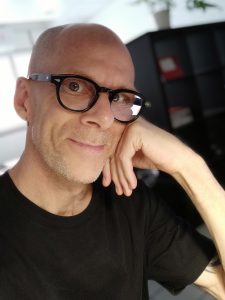
 I didn’t begin this work as a professional project.
I began it trying to understand why my life felt harder than it should have.
I grew up in a home shaped by my father’s alcoholism. There was food and shelter, but there was also instability, anger, and unpredictability. The atmosphere could change without warning. I learned to pay attention to other people’s moods, anticipate trouble, and adjust my behavior accordingly.
I didn’t recognize these responses as anything unusual. They were simply how I learned to deal with the world.
I had been in and out of therapy since I was about seven or eight years old. Over time, I developed what I considered a fairly realistic understanding of my childhood and the circumstances in which I had grown up. What I didn’t understand nearly as well was how those experiences continued to affect me in the present.
Shortly before beginning graduate studies in Chinese medicine, I developed a number of relatively minor but persistent health problems. I suspected that work-related stress was contributing to them, but I also believed they were somehow connected to my childhood experiences.
I began to wonder whether Chinese medicine, particularly acupuncture, might help me understand and change what was happening.
When I entered graduate school, I also began examining my emotional difficulties more deliberately. Chinese medicine introduced me to a way of understanding health that recognized the close relationships among physical condition, emotional life, daily habits, and the circumstances under which we live.
This made sense to me. It offered a way of approaching connections I had suspected but hadn’t been able to explain.
And acupuncture helped. I experienced changes in how I felt and functioned. Later, as a licensed acupuncturist, I saw treatment produce meaningful changes in my patients as well.
But I also began noticing something that would take me many years to understand fully.
The improvements didn’t always last.
I could treat someone and see a noticeable change in their physical or emotional condition. I could experience similar improvements through acupuncture on myself. But when the same habits, behaviors, and ways of responding continued, the difficulties often returned.
Over roughly twenty years of study and practice, I gradually came to understand the limits of what treatment alone could accomplish. Acupuncture could relieve symptoms, influence bodily functioning, and create opportunities for someone to respond differently. But it couldn’t make the necessary changes in how that person lived.
I saw this in my patients, and I saw it in myself.
Treatment could create an opening for change. But if the person continued living and functioning in the same ways, that opening might not lead anywhere. This didn’t diminish the value of treatment. It clarified what treatment could contribute and what meaningful, lasting change required.
Another question had been developing alongside this realization.
Chinese medicine recognized that prolonged or excessive emotions could contribute to illness, affecting the body as well as other aspects of human functioning. But I found a fundamental gap in its explanation: it did not adequately account for how ordinary human emotions became prolonged, excessive, or pathological in the first place.
Why would anger become a persistent feature of someone’s life rather than an occasional response to circumstances? Why would fear continue long after a threatening situation had ended? What caused emotional responses to become so deeply established that they could influence someone’s health and behavior for decades?
Understanding what these emotions did to the body wasn’t enough. I wanted to understand what produced and sustained them.
Around 2015, I began studying trauma more deliberately. That led me to complex trauma and eventually to childhood complex trauma. These areas of study helped me understand how earlier experiences could continue influencing emotional responses, expectations, behavior, and physical functioning long afterward.
But as my understanding developed, I began to recognize a limitation in approaching these questions primarily through trauma.
An experience didn’t necessarily have to be traumatic to have lasting consequences. I increasingly suspected that some of the most consequential influences on children were less obvious: the ordinary ways they were treated, the emotional atmosphere in which they lived, what was expected of them, and how consistently their needs were acknowledged or disregarded.
A child might experience these circumstances every day without recognizing anything unusual about them. Yet their repetition could profoundly influence how that child learned to understand the world, respond to other people, and conduct their life.
For years, I continued examining these questions primarily through childhood complex trauma. Only more recently did my thinking move toward a broader understanding centered on repeated conditions.
The question was no longer simply whether someone had experienced trauma. It was what conditions they had lived under, how those conditions had shaped their functioning, and how the consequences might continue long after the original circumstances had changed.
This also meant looking beyond childhood. Conditions encountered throughout life can influence our health, relationships, behavior, and ways of functioning. And the conditions we maintain through our own habits and behavior can sometimes contribute to the continuation of our difficulties.
Gradually, these different areas of study and experience came together.
Western developmental psychology helped me understand how repeated experiences could establish enduring emotional responses and ways of dealing with the world. Chinese medicine and Daoist thought provided a whole-person understanding of health and practical ways of influencing bodily condition and everyday living. My years of clinical practice taught me that even meaningful improvements through treatment might not last unless something changed in the person’s life.
Together, they changed how I understood suffering and what it takes to change.
Those developments became the foundation of Dao of Transforming Trauma.
Although the project grew partly from my own childhood experiences and my efforts to understand their consequences, its concerns now extend beyond childhood adversity and trauma. It examines how the conditions of human life shape our health, behavior, relationships, and functioning, and how we might participate in changing what has become established.
I don’t write as someone who has resolved every difficulty or discovered a method that works for everyone. Many of the questions explored here remain part of my own life.
But after years of trying to understand my own difficulties and helping others with theirs, one conclusion has become increasingly clear: understanding our past and relieving our symptoms, however valuable, are not necessarily enough. Where our own ways of functioning contribute to our difficulties, meaningful change requires us to change those ways of functioning.
If you want your life to change, you have to change.
I’m not writing from the finish line.
I’m writing from inside the work.
—–
Back to About DOTT.